0%
0%
throughput increase in 3 months
“We’d already driven huge gains manually - but eventually hit a wall. Almetra showed us what we couldn’t see and helped us increase output again.”
Filip Marjanović
PROJECT MANAGER
THE CHALLENGE
After various improvement workshops - eight kaizens, tighter 5S, and optimized flow - the line had reached one of the factory’s highest efficiency levels. It was running so well that new improvement opportunities were hard to find, yet cost pressure kept rising as wages grew, absenteeism increased, and skilled operators became harder to hire.
To break through the plateau, the team explored whether AI could help them find what traditional CI had missed.
WHY THE OLD WAY WASN’T ENOUGH
On paper, the team was doing everything right - following proven CI methods. But were they really seeing the whole picture?
MES in place
Tracked output, not process - the small inefficiencies stayed invisible.
Manual Stop Logging
Depended on human input - brief, frequent stops often went unrecorded.
Quality and scrap reports
Showed when defects appeared, but not where they came from. Missed steps stayed invisible.
Clean and consistent-looking data, but hidden inefficiencies that quietly drained performance.
The team wasn’t out of improvements - they were out of visibility.
ALMETRA’S APPROACH
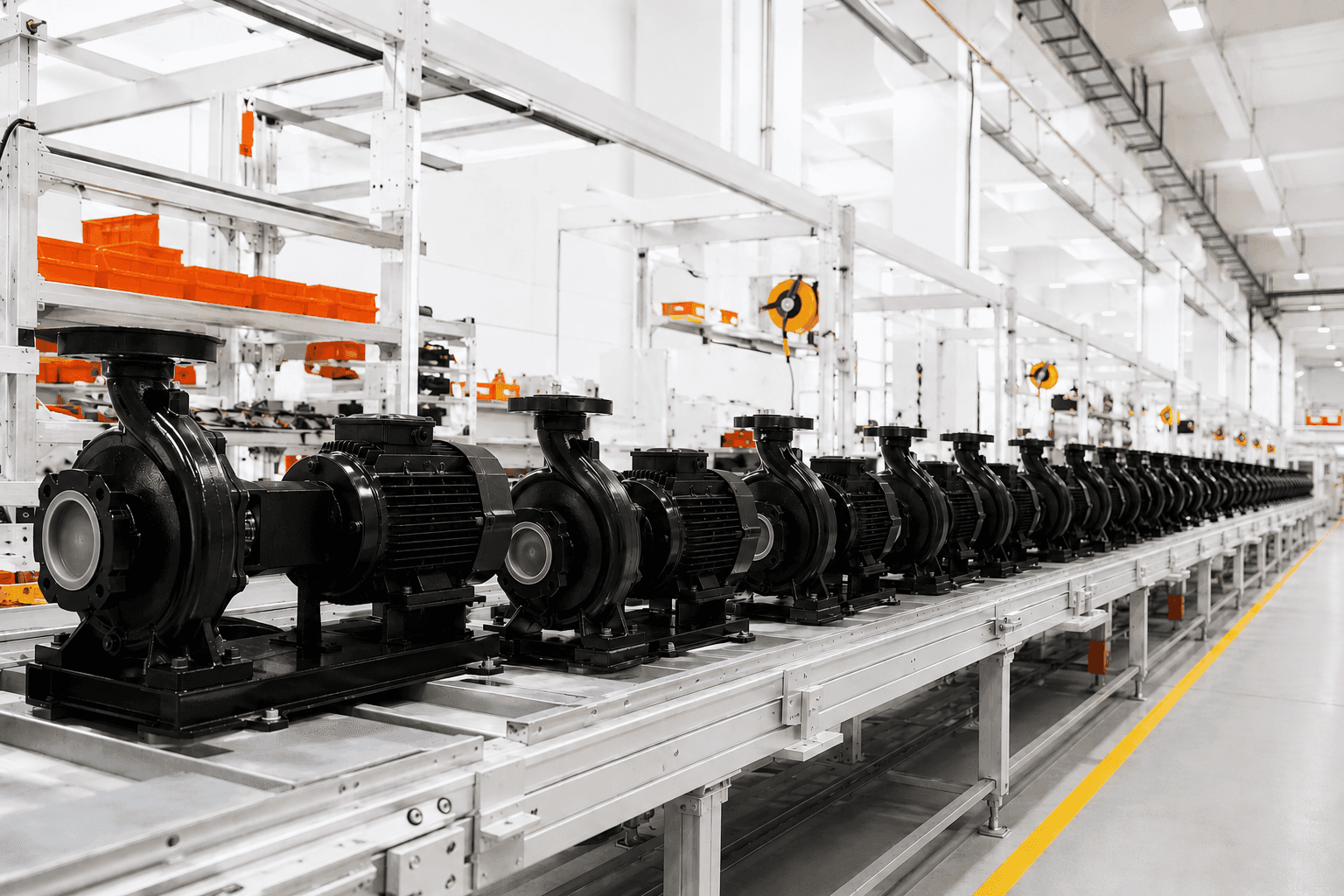
Within weeks, Almetra connected all 9 stations on the manual pump assembly line with cameras and AI.
The system continuously tracked how operators, tools, and materials moved, revealing what was really happening inside each cycle.
How the Team Used AI to See More
Detected True Causes of Long Cycles
After one month, Almetra flagged the longest cycle times and ran Non-Value-Added (NVA) analysis to explain why. Hidden losses were transformed into visible, actionable root causes.
Identified Downtime & Idle Pockets
Activity-time and presence views detected idle pockets when stations lacked either an operator or a product. This exposed recurring issues such as carts occasionally locking, extra motion, and materials not always within reach.
Standardized Best Operator Practices
Almetra identified the fastest repeatable cycles and surfaced click-to-video best practices. It also revealed where assembly steps were being skipped - the source of several quality issues.
Key Actions
Rebalanced work and optimized the layout
Simplified material handling and changeovers
Standardized packaging, labeling, and tools
Digitized tracking and error-proofing with AI checks and live feedback
THE RESULTS
11% throughput increase
Achieved within 3 months through focused waste elimination and bottleneck stabilization.
82% All-time high OPR
For the first time since launch, the line’s OPR exceeded 80%.
Manual data collection eliminated
Teams no longer spend hours doing time studies - AI now captures everything automatically, saving time and improving accuracy.
14% labor cost savings
Grundfos was able to maintain the same output while using 14% fewer labour hours, allowing the team to reallocate operators to other lines where additional capacity was needed.
Ready to see what AI could reveal on your line?
Questions
answered.
What is Almetra and how is it different from a camera or video analytics system?
What kinds of factories and production environments does Almetra work in?
How long does deployment take, and what does implementation look like?
How does Almetra handle data privacy and worker concerns?
Does Almetra replace our existing MES, ERP, or PLC systems?
What outcomes can we realistically expect?
Is Almetra only useful for improving existing lines, or can it help with new products and ramp-ups?
What does the path from pilot to full deployment look like?
© 2026 Deltia GmbH
v 2026.5